How to train a runaway dog?
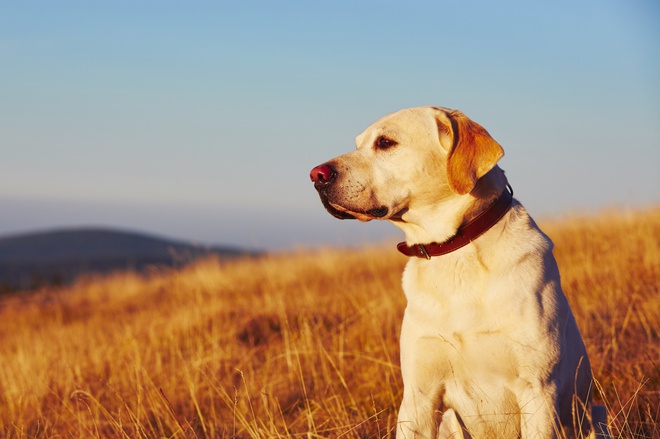
A runaway dog is an owner’s worst nightmare. Runaways can be explained by many factors and can be corrected with several methods.
Reading time : 7 min
Pets who like to unexpectedly leave their home are a great source of concern for their owners. It is therefore essential to understand the cause of such behaviour.
A runaway dog can come from the pet’s bad habit but also an owner’s inadequate behaviour, even if it seems harmless at first. It can make the owner anxious, but it can also have serious consequences. In this article, we will explain why dogs run away, and how to prevent any escaping attempts.
TOPICS
The risks of a runaway pet
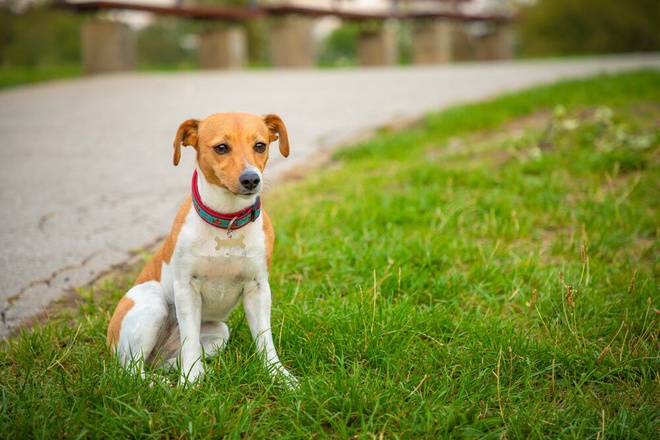
Having a pet run away is a serious matter and should not be taken lightly. It is important to train your canine friend not to run away because while the runaway dog is at risk, the owner is also responsible for their actions.
The escaped dog could be stolen
Even if a dog is microchipped, they can still be stolen. Indeed, when most people find a lost dog, they will go to the vet to try to find the owner. But some ill-intentioned or dishonest people may decide to keep the dog or resell them, especially if they’re a popular and sought-after breed.
The runaway dog could get injured
When a pet wander, they can get seriously injured or even killed. They can get hit by a car or intentionally killed by a malicious person. If they have been in an accident, their injuries will result in veterinary costs, which can be substantial.
The owner is responsible for his dog
If a dog is responsible for an accident, or assaults or injures someone, even if unintentionally, the owner is responsible for the animal's actions and can face having their animal put down.
The owner could go to jail if something happens
Similarly, if the dog is responsible for an accident causing the death of one or more people, the owner of the animal will be held criminally responsible.
Seeing your dog repeatedly run away can undoubtedly be discouraging for the owner. However, considering the risks to the animal and the owner, it seems wise to correct this behaviour as soon as possible.
Why do dogs run away?

Before trying to eradicate annoying and potentially dangerous pet behaviour, it may seem important to understand the causes. There may be many reasons for running away.
Hunger
Hunger can be a factor in running away. Indeed, if the weight of a dog is judged to be problematic by the veterinarian, the owner will be advised to adapt or reduce their diet. This is undoubtedly a very good thing for their health.
However, unless the veterinarian advises otherwise or there is an emergency, this readjustment of food must be done in a completely painless way for the pet. In other words, if a certain dog breed has obesity tendencies, like Labradors, the owner must provide a suitable diet.
It will be necessary to reduce their portions little by little so that they do not suffer. Otherwise, your dog may be tempted to run away to go eat around the neighbourhood.
Predatory instinct
Even when domesticated, most pets obey their primary instincts. All dogs have a predatory instinct that is developed and that can therefore cause them to run away. They may become excited at the sight of a running cat.
It is partly for this reason that it is not advised to encourage your pet's predatory instincts, even when a puppy.
Lack of exercise
For dogs, it is also important to differentiate between potty walks and exercise walks. Most dogs need physical exercise and mental and olfactory stimulation. This is important for their physical and mental health.
Boredom and loneliness
The outside world is full of smells, noises, and movement. Noise-sensitive pets or curious dogs may escape the yard to explore when the door opens.
To prevent this, create a daily routine. Long walks after work help reduce restlessness. Active breeds need more exercise to avoid anxious behaviour.
Hot weather
Some dogs escape in summer to find mates. Males may detect females in heat, and vice versa. Spaying or neutering helps prevent these stressful events.
Fear
Dogs can fear loud noises like thunderstorms, fireworks, gunshots, or nearby construction. Keeping them indoors reduces the urge to run away. During stressful events, close doors and windows and comfort your pet. This keeps them safe until the thunder or other triggers have passed.
10 questions to test your pet training knowledge
Do you know everything there is to know about training dogs and cats? Answer our 10 questions to find out!
The solutions against runaways
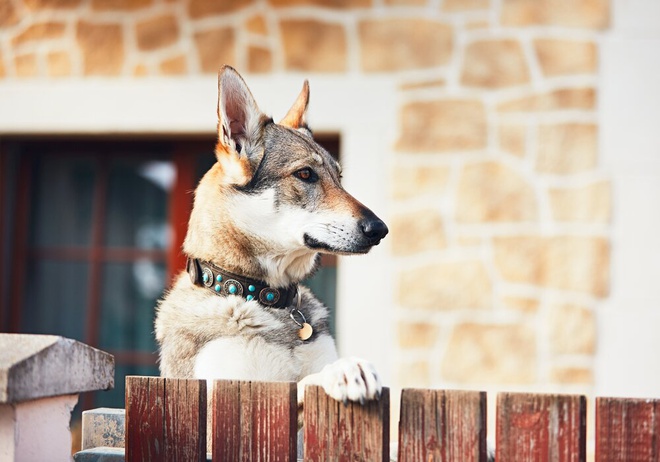
Sometimes, identifying the causes of runaways is unfortunately not enough to solve them. It is then possible to resort to solutions that will help contain the desire of dogs to run away.
Dog fence for the garden
An outdoor dog fence is effective for keeping pets safe. Choose a tall, sturdy fence based on your dog’s size to secure the fence perimeter. While a 3 ft. fence can stop a Chihuahua or Maltese, larger breeds like a Boxer or Doberman need a higher barrier to prevent escape.
What size should the fence be?
Most fences are 3 to 9 ft. high, enough to deter puppies or calm dogs. Still, some will dig near shaded spots or patio furniture to get out.
How to stop your dog from digging under a fence?
Boredom is often the cause. Long walks on a leash, play sessions, a sandbox for digging can reduce escape attempts and improve things significantly. Making sure your pet gets plenty of exercise will allow them to expend that extra energy.
In other cases, this may not be enough. If your dog continues to dig, you’ll need to patch up the bottom part of the fence. Here are some ideas of how you can do this.
- If digging continues, bury chicken wire under the fence, cover with soil, or place large rocks to block tunnelling.
- You can also attach chain-link fencing or install an L-shaped fence.
- An airlock or double-gated entry adds extra security. These help locate your dog quickly if it leaves the garden.
Anti-runaway fences
Anti-runaway fences, also known as electric fences, are invisible fences meant to deter any pet from going outside the garden.
How much do electric dog fences cost?
The kit consists of an antenna wire, a transmitter box, a receiver box, and an electric collar. Anti-runaway fences are invisible. The link between the anti-runaway fence and the collar is through a receiver. The price of an anti-runaway fence is around $180.
How do electric dog fences work?
The owner must define the safe environment the dog can access. This involves burying the transmitter and antenna wire in a closed loop around the fence and gates for security. When approaching the anti-runaway fence, the collar warns with a beep, then a shock as correction. The dog forms an association with the barrier through negative reinforcement.
Anti-runaway collars
These wireless dog collars are suitable for all sizes of dogs and can be adjusted. They consist of a box containing a battery and a radio receiver attached to the collar and remote control.
These anti-runaway collars are used in recall training. When the owner calls the dog back, the dog must return to the call. If the dog does not return, the owner activates the remote control, which triggers sound or electrical stimuli.
The owner can also activate the remote control if they think that the dog is wandering too far away. For a few days, the dog assimilates the separation from their owner as an unpleasant, painful experience.
While fences and anti-runaway barriers can be permanent solutions, this is not the case with anti-runaway collars which must be temporary.
The limitations of these anti-runaway systems
If an anti-runaway fence or collar fails, a chronic escapee may resume runaway behavior without understanding the dog training goal. Punishing a dog after escaping is ineffective. Without positive behaviors encouraged through reinforcement, no lasting association is made.
Fear of electrical correction can harm a dog’s well-being, leading to anxiety, aggression, lethargy, or compulsive licking. A safe environment with secure fence and gates, plus consistent positive training, offers better security than relying solely on punishment.
Using a GPS tracker
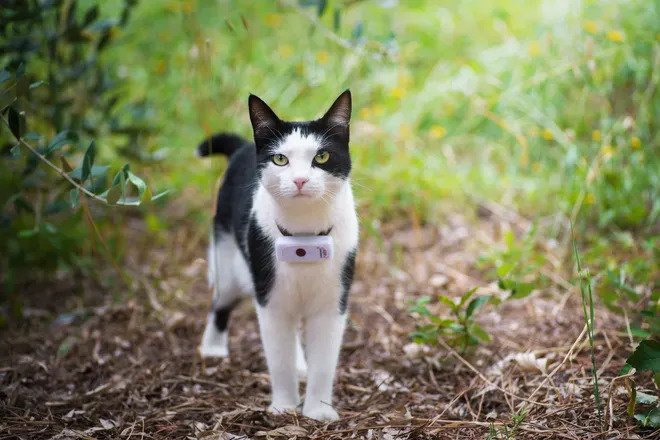
GPS trackers for dogs seem to be an interesting alternative for pets and reassuring for their owners. There are various GPS trackers; some are integrated into the collar; others are attached to the animal's collar. The latter is a good solution because some dogs do not like to wear a collar and prefer to wear a harness.
What is a GPS Tracker
A pet GPS is a small, lightweight device that does not interfere with the pet's movements. It is made of resistant materials and is, of course, waterproof so that it can follow the animal in all their wanderings. It usually works with a smartphone application, which makes it extremely convenient and easy to use.
There are GPS with and without a subscription, but GPS with a subscription are undoubtedly more efficient when it comes to tracking living animals on the move. Some GPS collars can send the position of the pet in real-time (every 10 seconds) without any distance limit.
GPS tracker as a training tool
Unlike other devices, GPS trackers do not work against the education of the dog. Some GPS devices have a training programme that is similar to conditioning. This consists of vibrating the GPS tracker from the smartphone app as soon as the dog eats.
Over time, the dog will associate the vibration of the GPS collar with their meal. When the dog is late returning, simply trigger the collar vibration to see it return.
Furthermore, if the lost dog is found by a third party or picked up by the dog warden, the GPS tracker is an unequivocal indicator that the stray dog has an owner. A tool that offers an additional chance of finding your pet
Conclusion
In any case, it is important to remember that, for their safety, a pet must be vaccinated, identified, and sterilised. First, because sterilising a dog is an inexpensive option compared to the risks involved and can put an end to runaways. That said, if runaways persist, identification is a valuable aid in the process of finding the pet, which is not insignificant. Educating your pet can help reduce the number of runaways.
While there are physical solutions, it is important to choose a durable device that is not intrusive to the animal. There are many options, but the causes of runaways associated with the GPS tracker seem to be an enlightened choice for both the pet and their owner. Discover the functionalities of dog trackers and never lose your pet again!
Continue reading our guide
This article is a part of a complete guide on the subject. Do not miss the next chapters.
Do you know everything there is to know about training pets?
Answer our 10 questions to test your pet training knowledge.