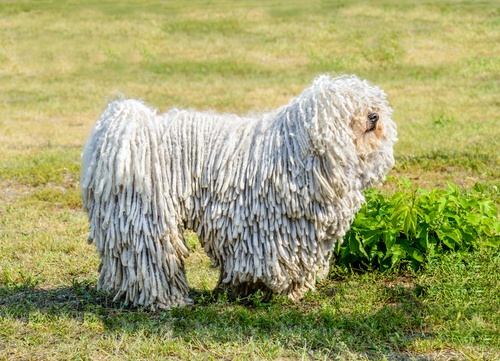
Introducing the Komondor
Find out everything you need to know about the Komondor: its characteristics, its behavior, its education, its price.
The Komondor, a guardian with a dreadlocked coat
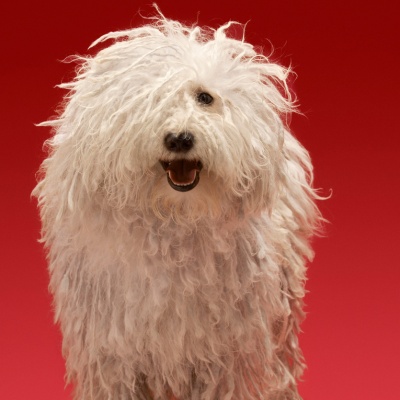
The Komondor, a Hungarian breed, is known for its unique dreadlock-like coat, which provides protection from predators and weather. Bred to guard livestock, this brave and loyal dog is deeply affectionate with its family.
Though reserved with strangers, Komondors are gentle and protective, making them excellent watchdogs and family pets. Their distinct appearance and devoted nature set them apart as a truly remarkable breed.
KOMONDOR FACT FILE
This section highlights the unique features of the Komondor breed.
Group
The Komondor belongs to the Working Group, known for strong, protective dogs. They are brave and loyal guardians.
Size
Komondors are large dogs, standing 25 to 27.5 inches tall and weighing 80 to 100 pounds.
Coat length
The Komondor’s long, corded coat forms natural dreadlocks, offering protection.
Coat color
The coat is typically white, a defining feature of the breed.
Living environment
Komondors thrive in spacious environments, ideal for rural or suburban homes.
Sociability
Loyal and protective, Komondors are good with children and can live with other animals with proper socialization.
Health
Generally healthy, but prone to hip dysplasia and bloat. Regular vet care is important.
Training
Komondors are intelligent but independent, requiring patient and consistent training with positive reinforcement.
Too difficult to choose the right dog breed?
We can help!
Each dog has its own character and specific needs. Making the right choice will allow you to ensure their well-being and yours.
Thanks to our quiz, you will know the breed that suits you based on your personality, your style and place of life and many other criteria.
Don't wait any longer and take the quiz to find out the answer!
The Komondor, the dreadlocked guardian
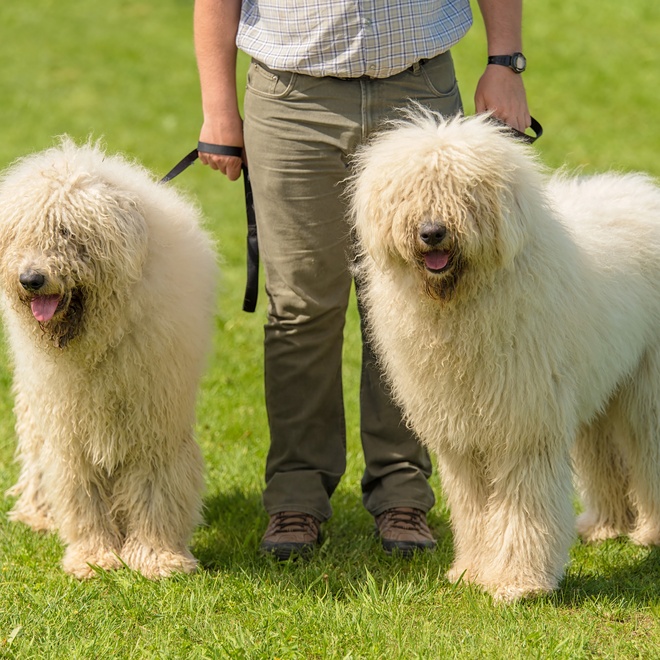
The Komondor is a large, well-balanced dog with a distinctive white, corded coat that gives it a unique dreadlocked appearance. Its strong, muscular build is complemented by a face often hidden beneath its heavy coat, adding to its striking look.
Size and weight of the Komondor
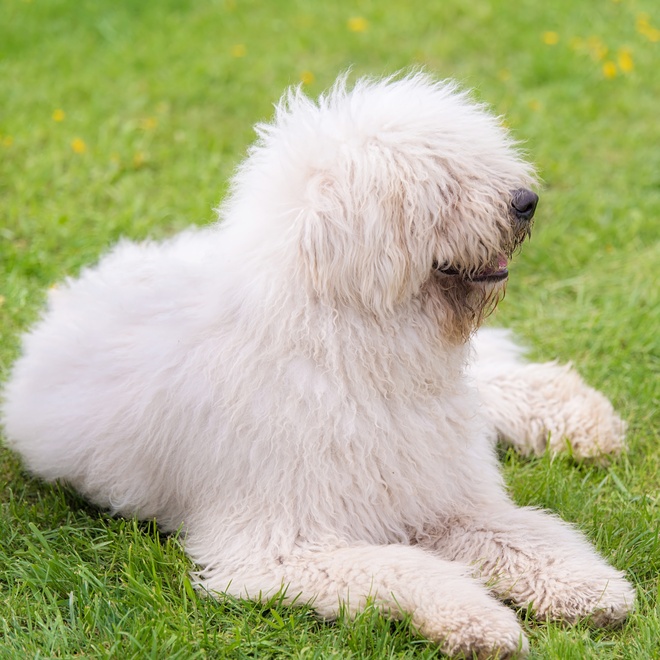
Female Komondors stand between 25 and 26.5 inches, while males reach up to 27.5 inches. Females weigh 80 to 100 pounds, with males up to 110 pounds. Komondors grow quickly but typically reach their full size and weight by 2 to 3 years old.
The coat of the Komondor
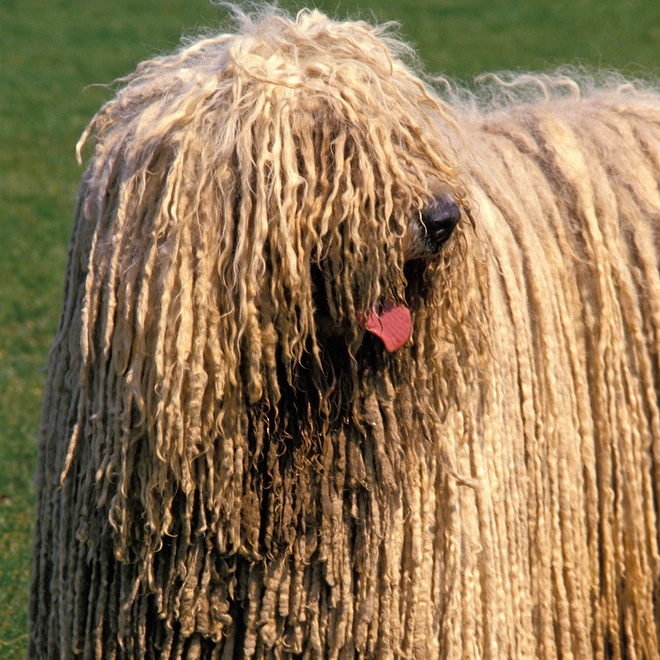
Coat length
The Komondor has a unique, long, corded coat that resembles dreadlocks. The fur is coarse and thick, with cords that can reach the ground as the dog matures.
Coat color
The Komondor’s coat is exclusively white, helping it blend in with the flocks it traditionally guarded.
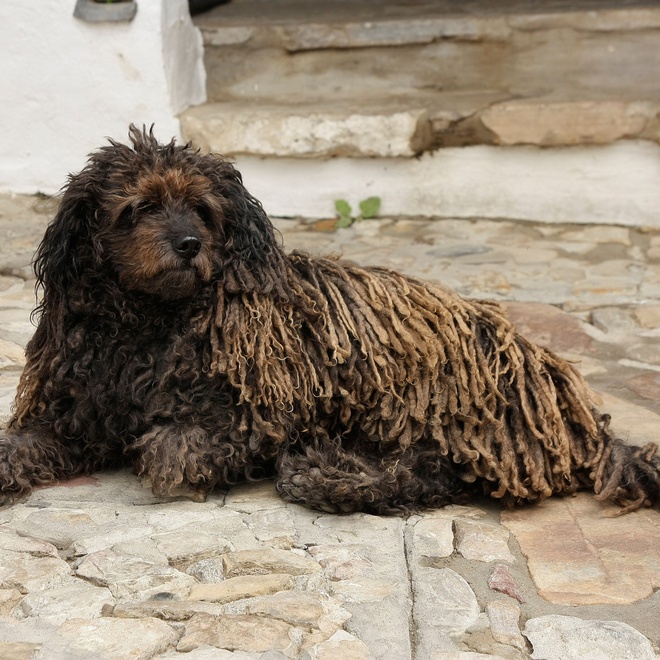
Coat care
The Komondor’s coat requires regular maintenance to prevent matting. Cords must be separated by hand, especially when young. Bathing is rare, and thorough drying is essential due to the coat's density.
Other characteristics of the Komondor
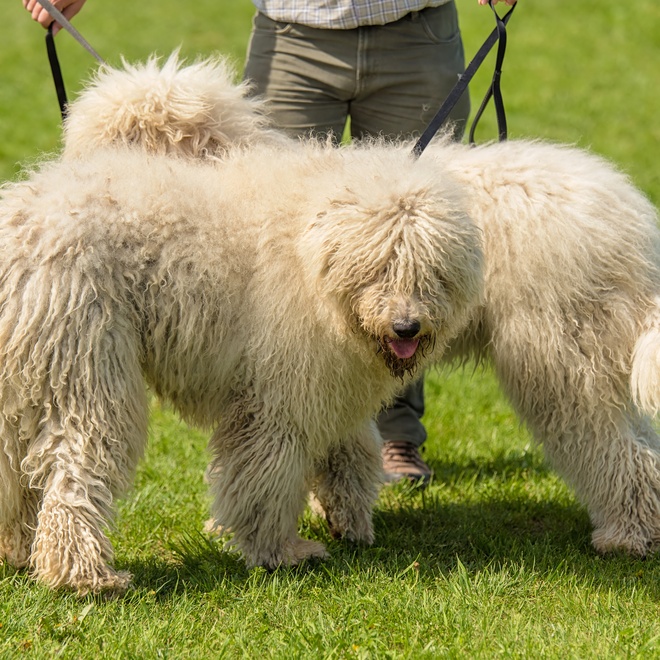
Physical features
The Komondor is a large, well-proportioned dog with a strong, balanced build. It has a broad, slightly rounded head with dark brown, expressive eyes. The ears are medium-length, set just above eye level, and hang close to the head. Its muscular body, with a deep chest and strong legs, reflects its powerful and enduring nature.
What is the temperament of the Komondor?
The Komondor is loyal, protective, and affectionate, making it a devoted and vigilant companion.
Komondor category
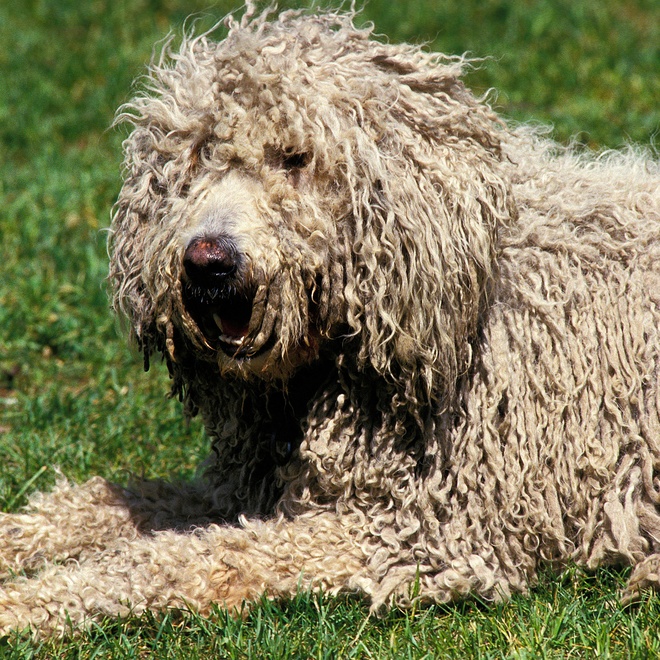
Among the 400 registered dog breeds, the Komondor is part of the Working Group, known for strong, intelligent dogs like Mastiffs and Rottweilers. These breeds excel in tasks like guarding and protection, with the Komondor particularly skilled at protecting livestock and families.
Behavior of the Komondor
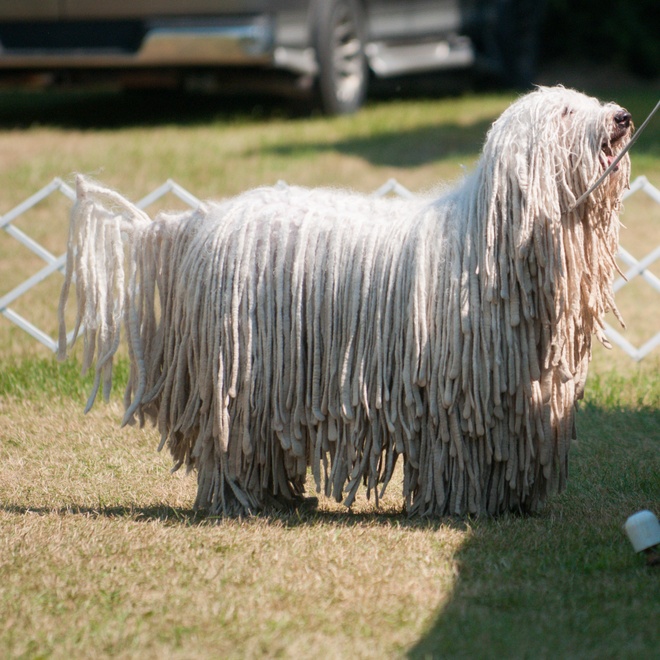
Loyal and protective
Komondors are loyal and protective, forming strong bonds with their owners. They thrive with a present and attentive owner, needing constant companionship.
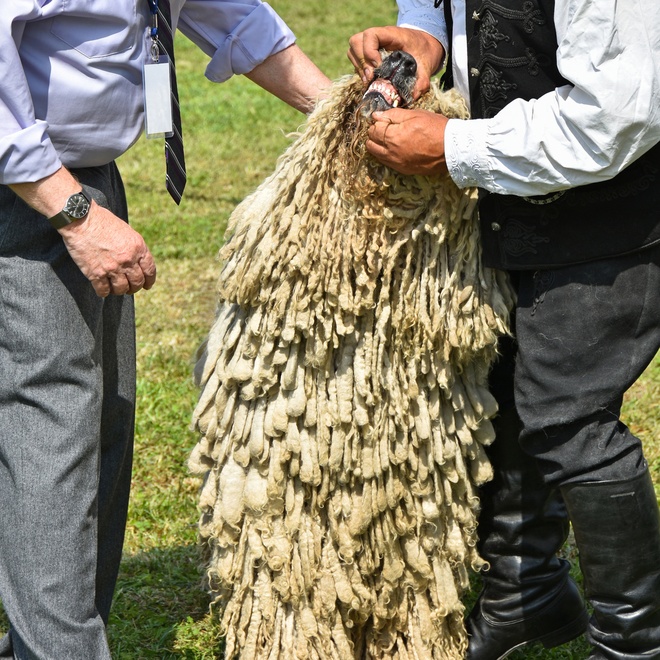
Sociable with training
Komondors can be reserved but affectionate with their family. They can get along well with children and other pets if socialized early, making them well-rounded companions.
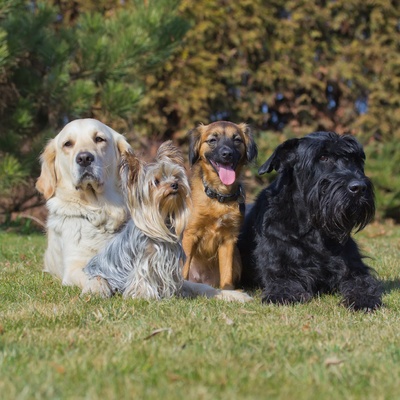
Which dog breed is right for you?
Take the test and find out the dog breed that matches your personality and lifestyle.
The Komondor's living environment

Best in spacious homes
Komondors can adapt to various living situations, including houses in urban or rural settings, but they thrive best in environments where they have ample space to roam. They require an attentive owner who can provide plenty of interaction and at least two walks daily, each lasting about 30 minutes.
Needs space and stimulation
While adaptable, Komondors benefit greatly from having access to an outdoor environment where they can explore and expend energy. A large yard or frequent outdoor activities are ideal for satisfying their curiosity and keeping them physically and mentally stimulated.
Training the Komondor
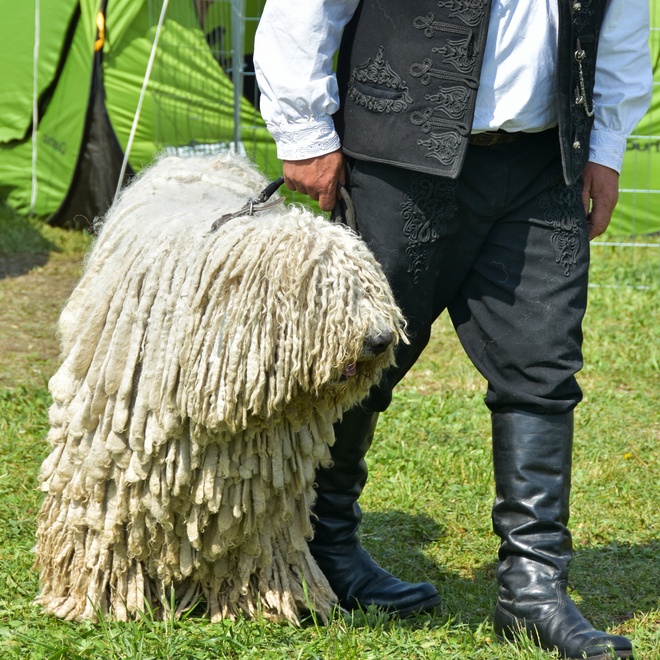
Intelligent but independent
The Komondor is intelligent and quick to learn but can be independent. Early, consistent training with positive reinforcement is key. A GPS collar is recommended to prevent escapes.
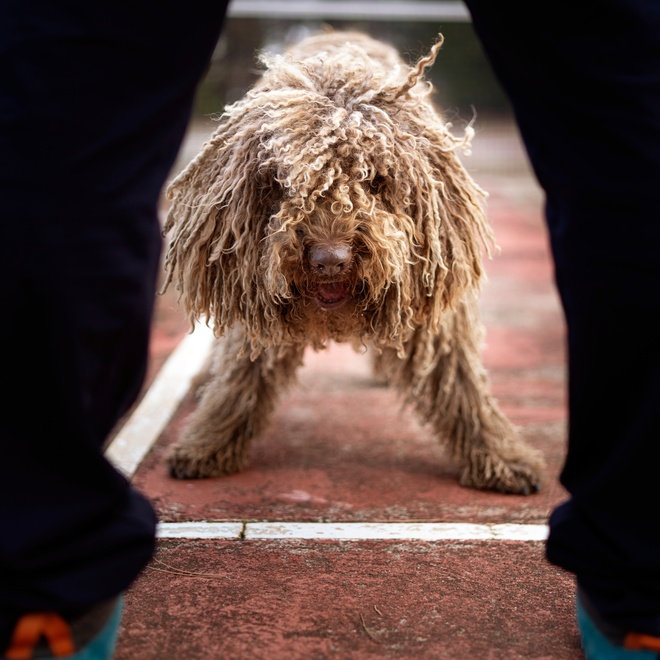
Responsive with firm guidance
Komondors respond well to training but need firm, patient guidance due to their independence. Early socialization is essential for developing good behavior.
How to take care of the Komondor
The Komondor is generally healthy, but daily care is crucial to prevent diseases and infections. Regular grooming, proper diet, and exercise are key to maintaining its well-being.
The health of the Komondor
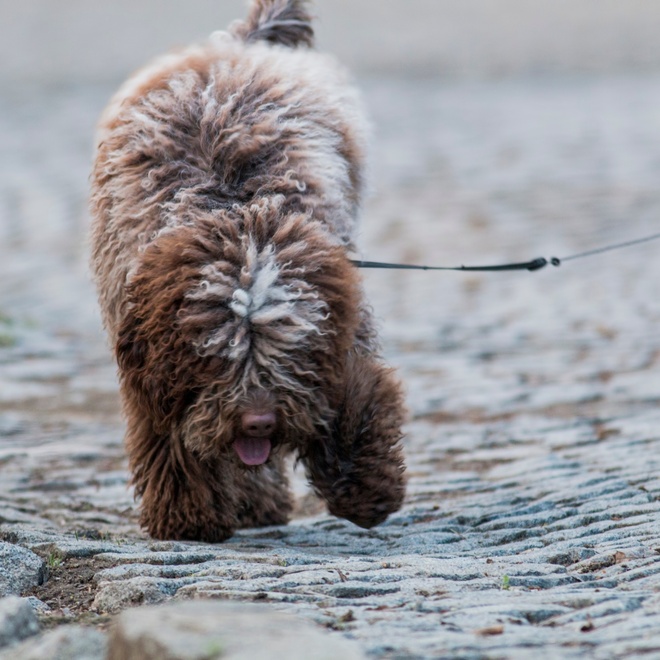
Illnesses
Komondors are typically healthy but can be prone to hip dysplasia and bloat. Their lifespan is usually 10 to 12 years.
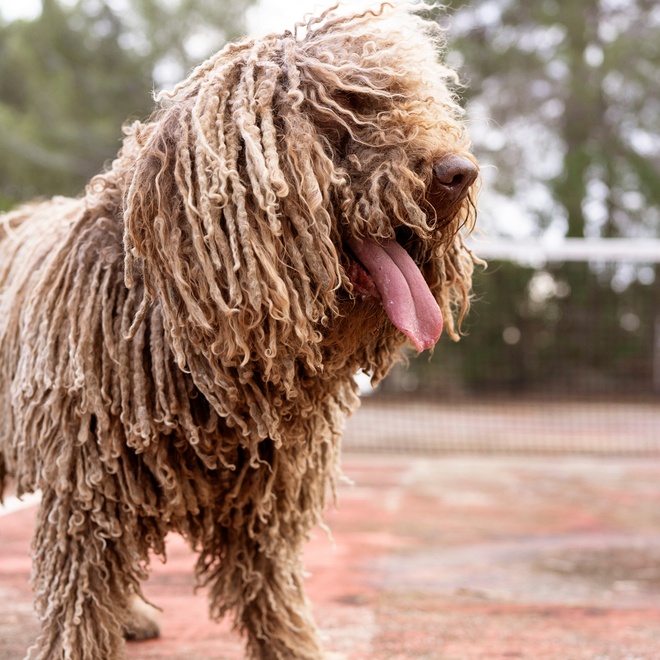
Routine care
Regular vet check-ups, vaccinations, and parasite treatments are essential. At home, the coat needs regular cord separation, and ears should be cleaned to prevent infections. Komondors are not hypoallergenic.
Feeding the Komondor
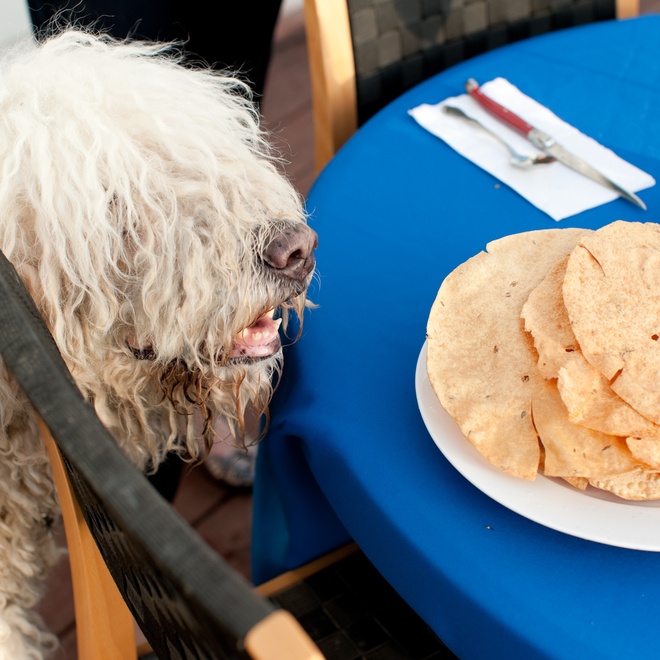
Daily requirements
Komondors need a balanced diet rich in proteins and vitamins. Premium kibble is ideal, with the option to supplement with lean meats for extra protein, while keeping fats low.
What does a Komondor cost?
The Komondor is a respected but less common breed. Before adopting, it's important to consider several factors.
How to choose your Komondor
Finding the right breeder
Before adopting a Komondor, there are some important points to consider. First and foremost, you need to check that the breeder is reputable. This means visiting the breeder's premises to assess the living conditions and behavior of the dogs. Responsible breeders will provide transparent information about the puppy's health and any genetic illnesses in its lineage.
Lastly, mandatory electronic identification, like microchipping, is not always mandated at the federal level in the United States for cats and dogs. But microchipping is widely acknowledged as a successful way to permanently identify pets and increase the possibility of reuniting lost pets with their owners, even in the absence of universal regulations. As a pet owner, it is advised to inform yourself about municipal laws to ensure the safety and wellbeing of your pet.
The price of a Komondor
Komondor puppies typically cost between
and
Annual costs, including veterinary care and food, range from
to